
Map of Northern Andes


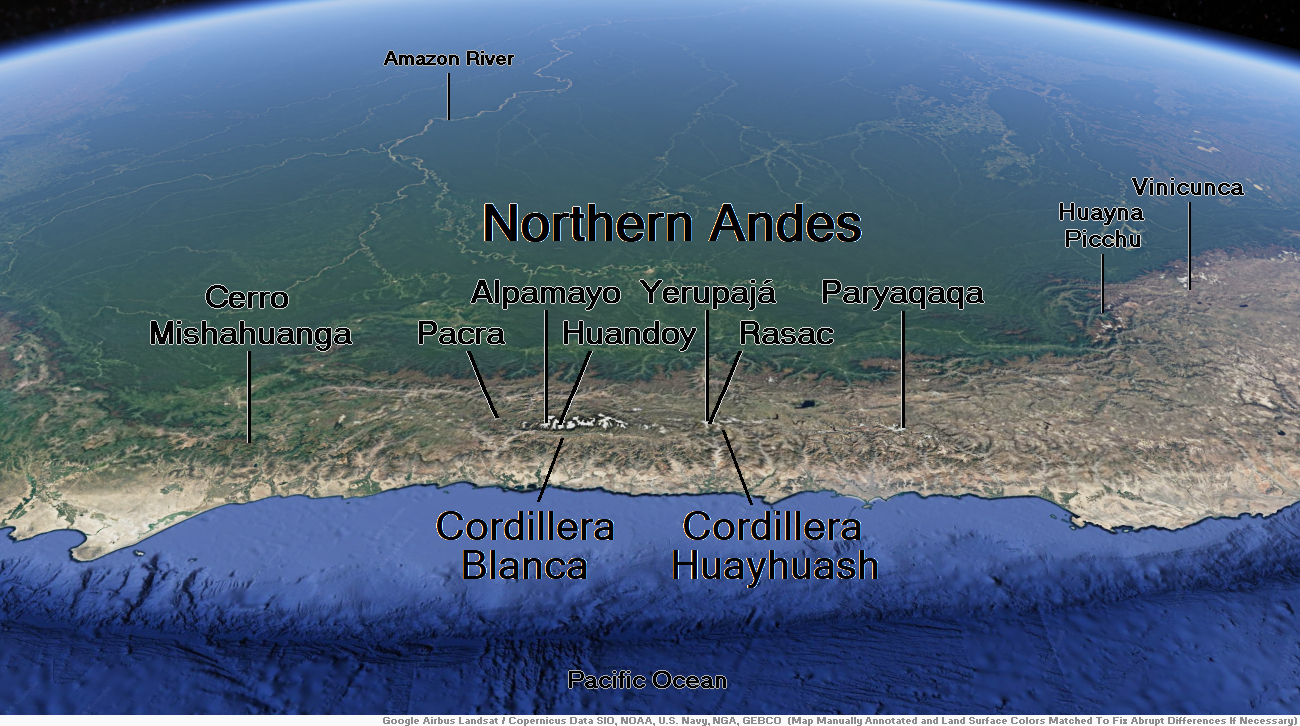
Alpamayo Region

Alpamayo Panoramic
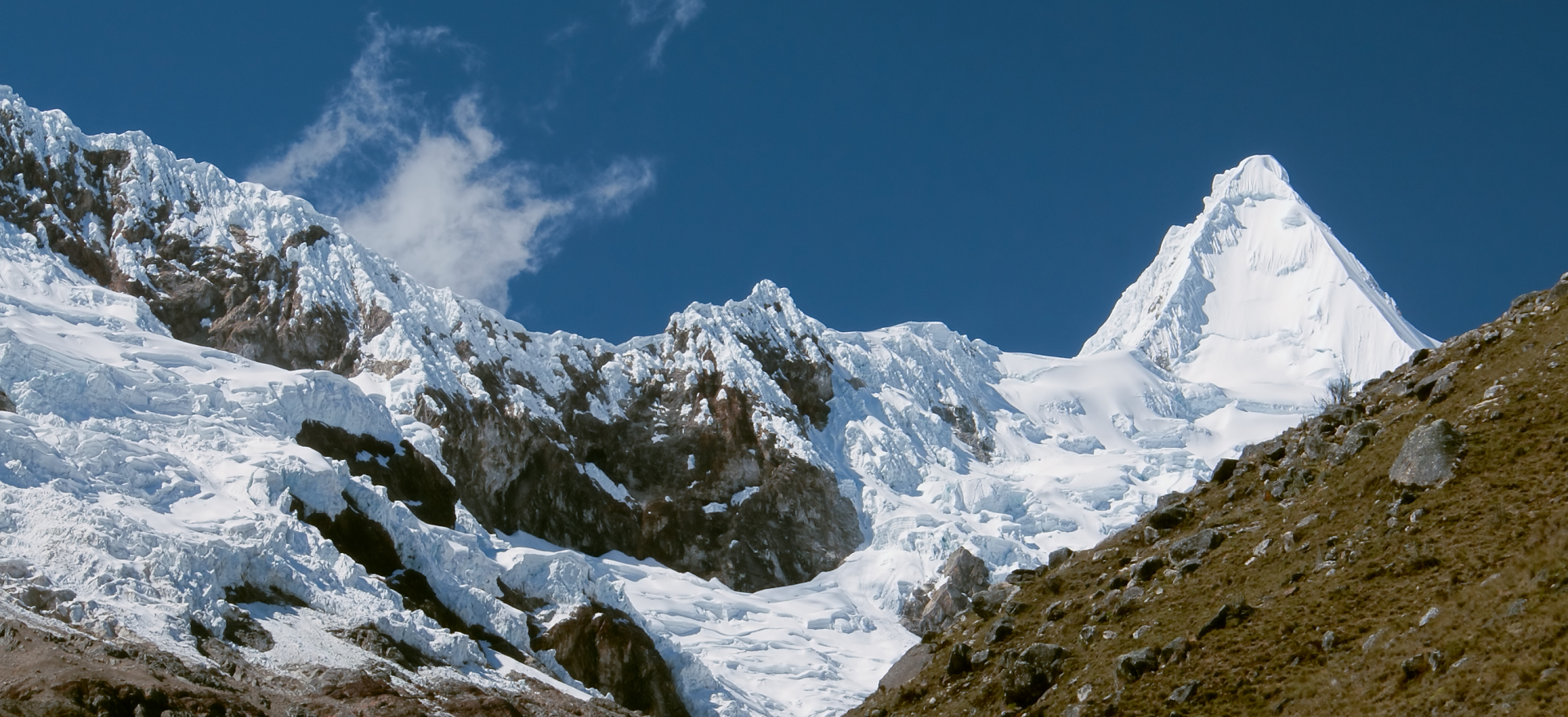
MisoKnitl (iStock)


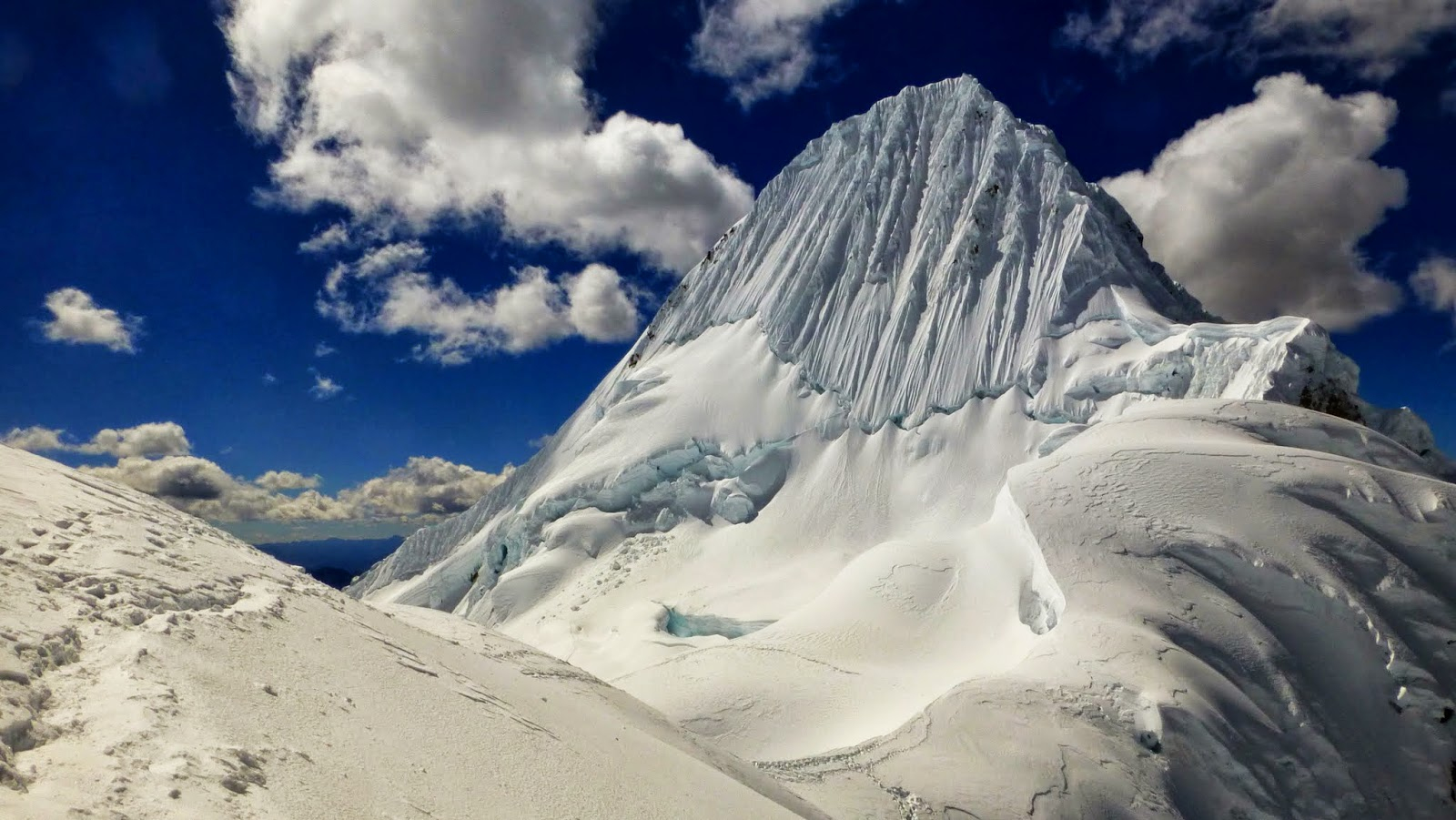
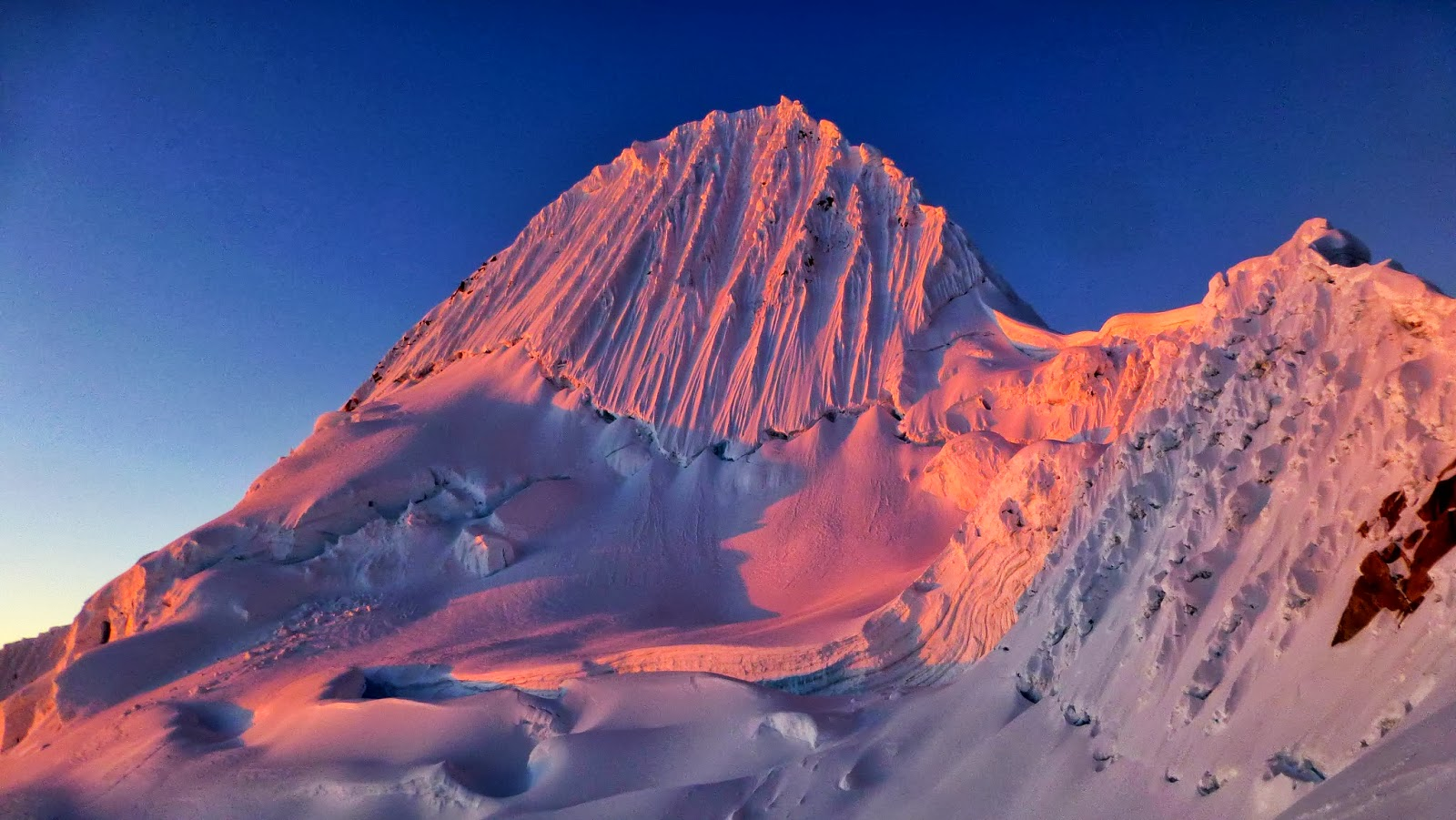
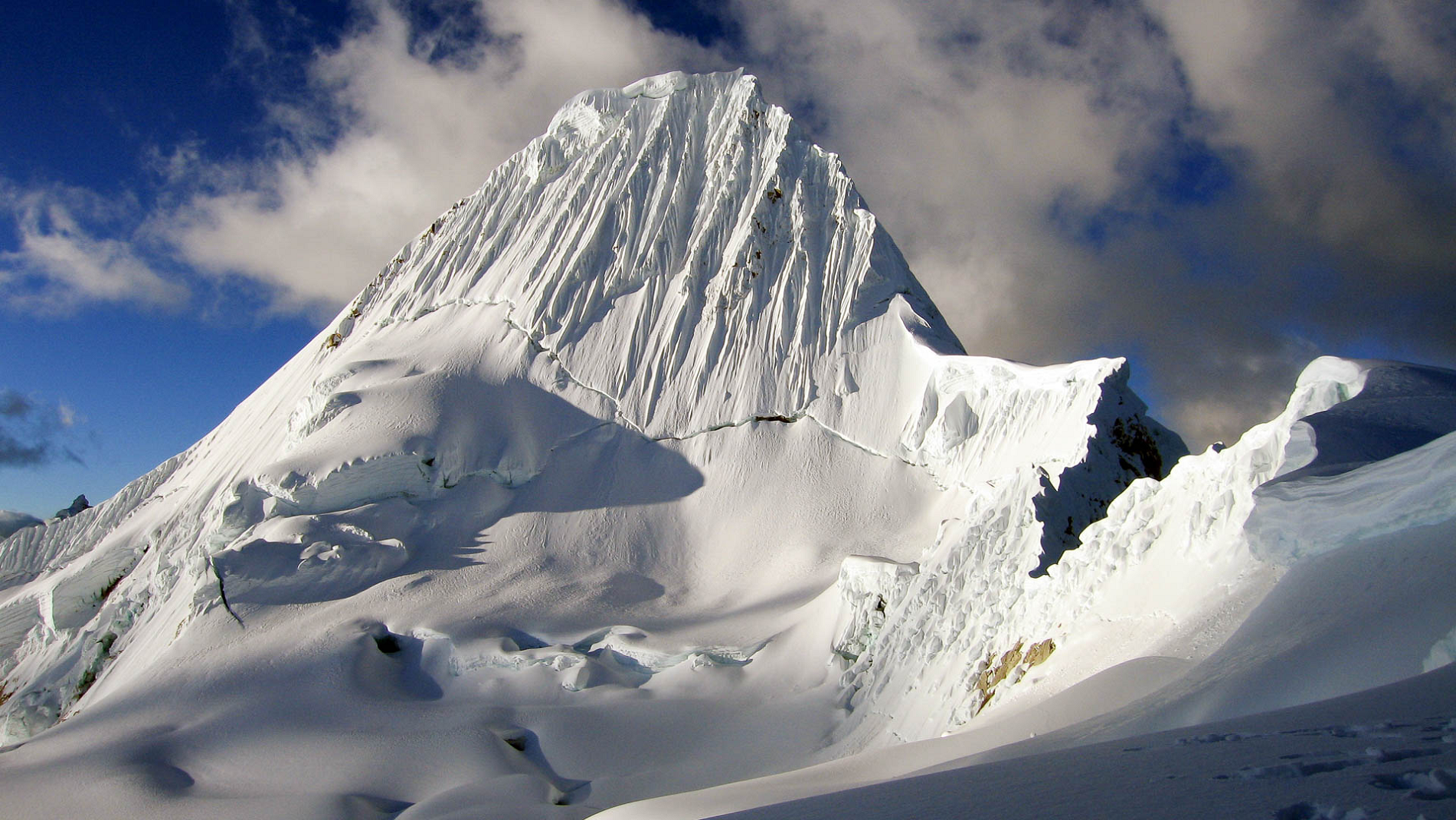
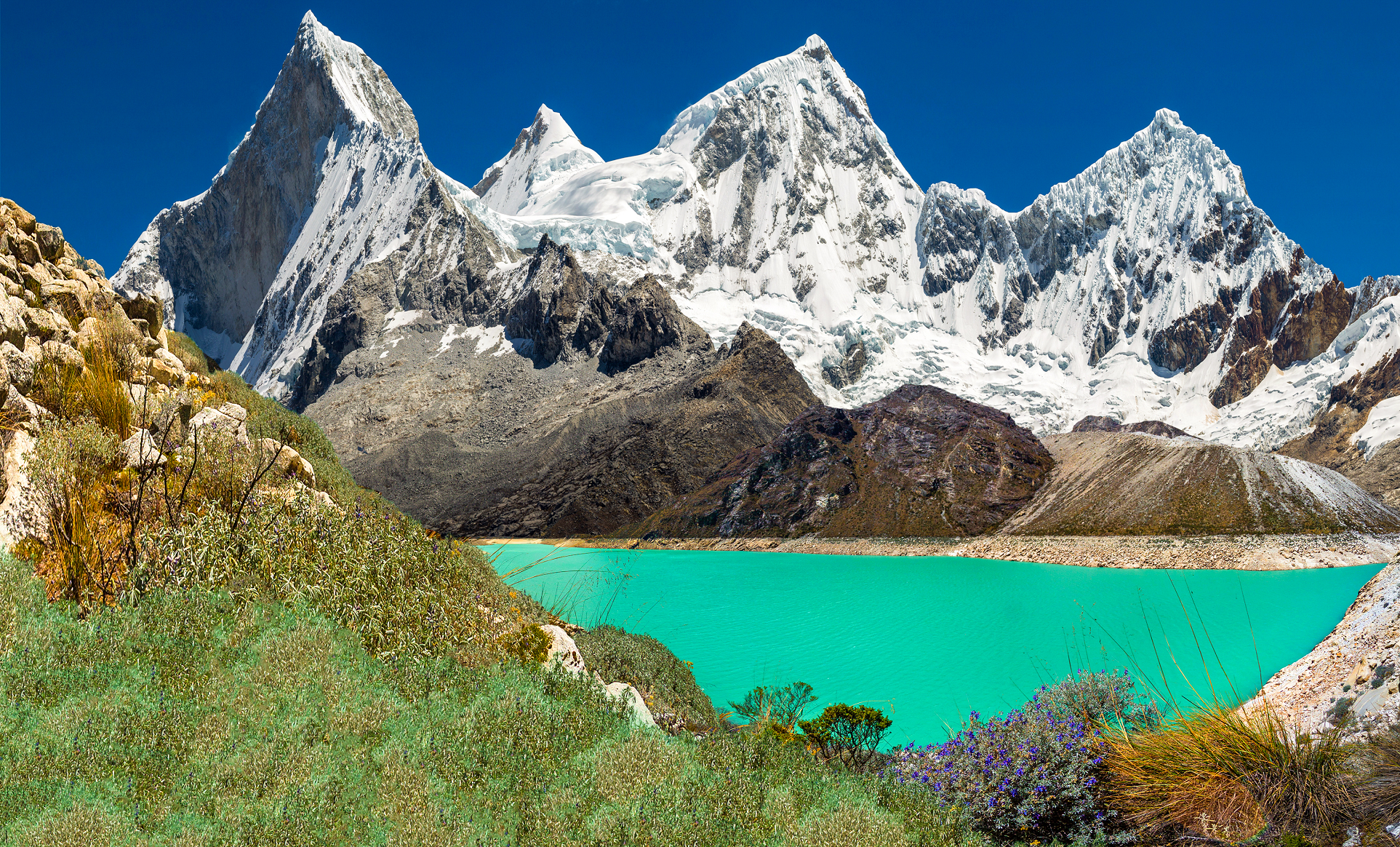
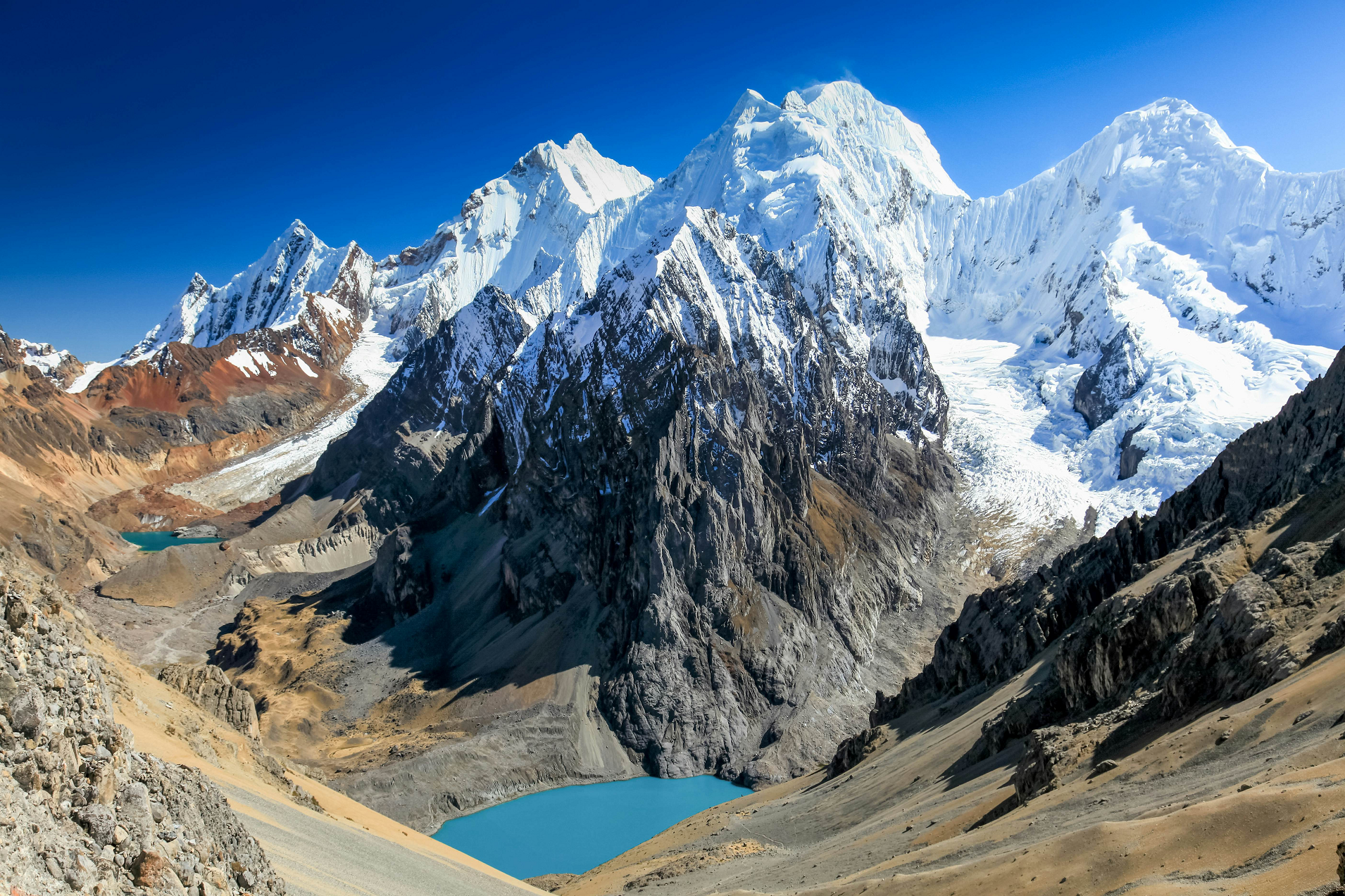
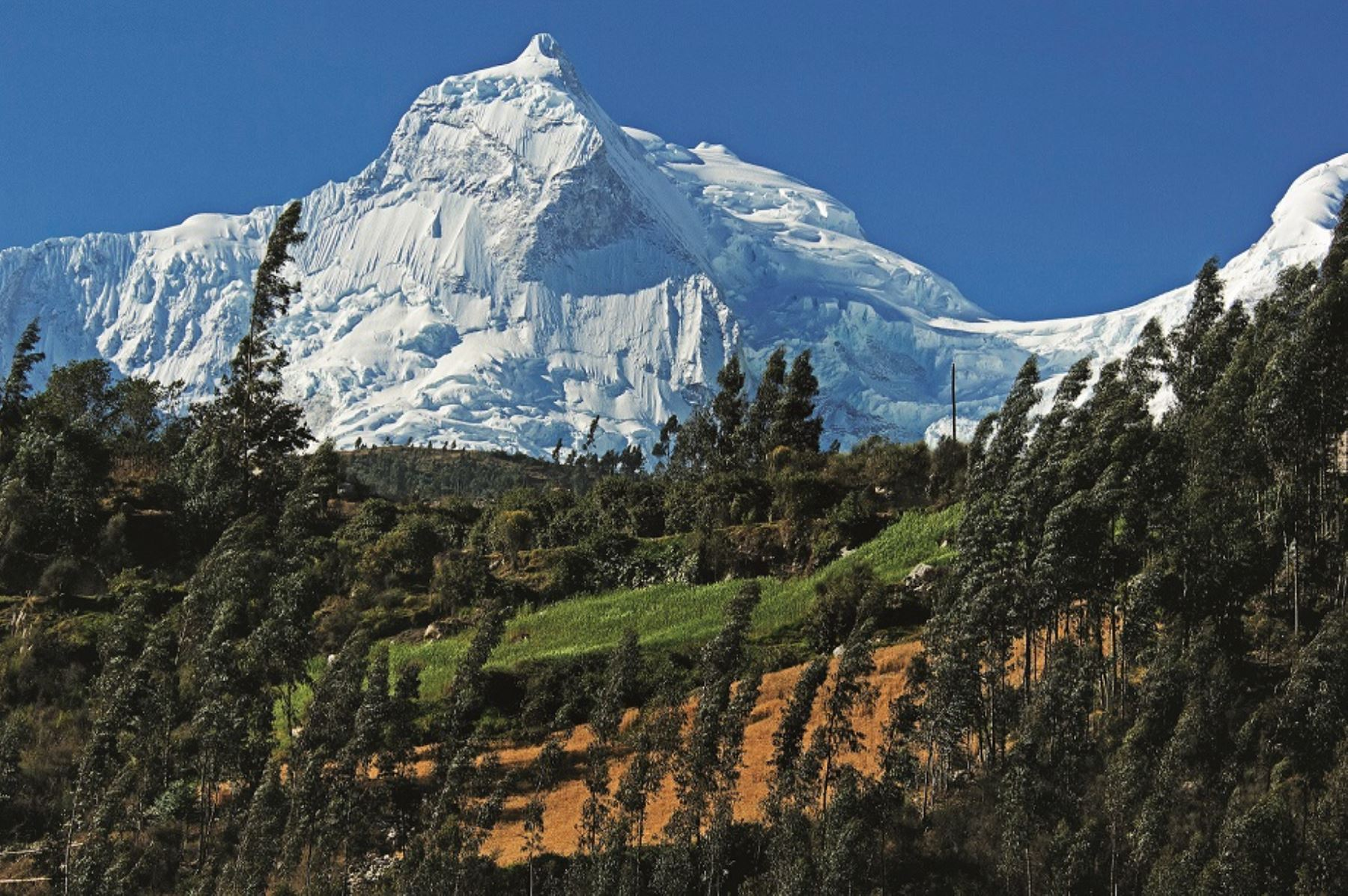
Alpamayo[2][3] (possibly from Quechua allpa earth, mayu river,[4] “earth river”) or Shuyturaju[3] (possibly from Ancash Quechua huytu, shuytu oblong, slim and long, Quechua rahu snow, ice, mountain covered in snow)[5][6] is one of the most conspicuous peaks in the Cordillera Blanca of the Peruvian Andes. Alpamayo Creek originates northwest of it.[2]
The Alpamayo lies next to the slightly higher Quitaraju.
In July 1966, the German magazine “Alpinismus”, published a photo of Alpamayo taken by American photographer Leigh Ortenburger accompanied by an article on a survey among mountaineering experts, who chose Alpamayo as “The Most Beautiful Mountain in the World”.[7]
Climbing history and routes
Most popular routes start from the village of Caraz, on the north of the Cordillera Blanca. A French-Belgian expedition including George and Claude Kogan claimed to have made the first ascent in 1951. After studying the photos in George Kogan’s book The Ascent of Alpamayo, the German team of G. Hauser, F. Knauss, B. Huhn & H. Wiedmann came to the conclusion that the 1951 team did not reach the actual summit, thereby making their ascent via the north ridge in 1957 the first.
The most common climbing route, known as the Ferrari route, is situated on the southwest face of the mountain. It was opened in 1975 by a group of Italian alpinists led by Casimiro Ferrari. It is considered a difficult climb, demanding good crampon and ice climbing technique. There are incomparable views of steep ice faces, penitentes, gigantic white walls and ridges like those of Huandoy Norte, Artesonraju and Huascaran Norte, similar to the finest of the Himalayan scenery. There are also at least six other alternative climbing routes, the second most popular being the Vasque-French route.
This article uses material from the Wikipedia article Alpamayo, which is released under the Creative Commons Attribution-Share-Alike 4.0 International License (view authors).
 Vitaliy (Summit Post) | 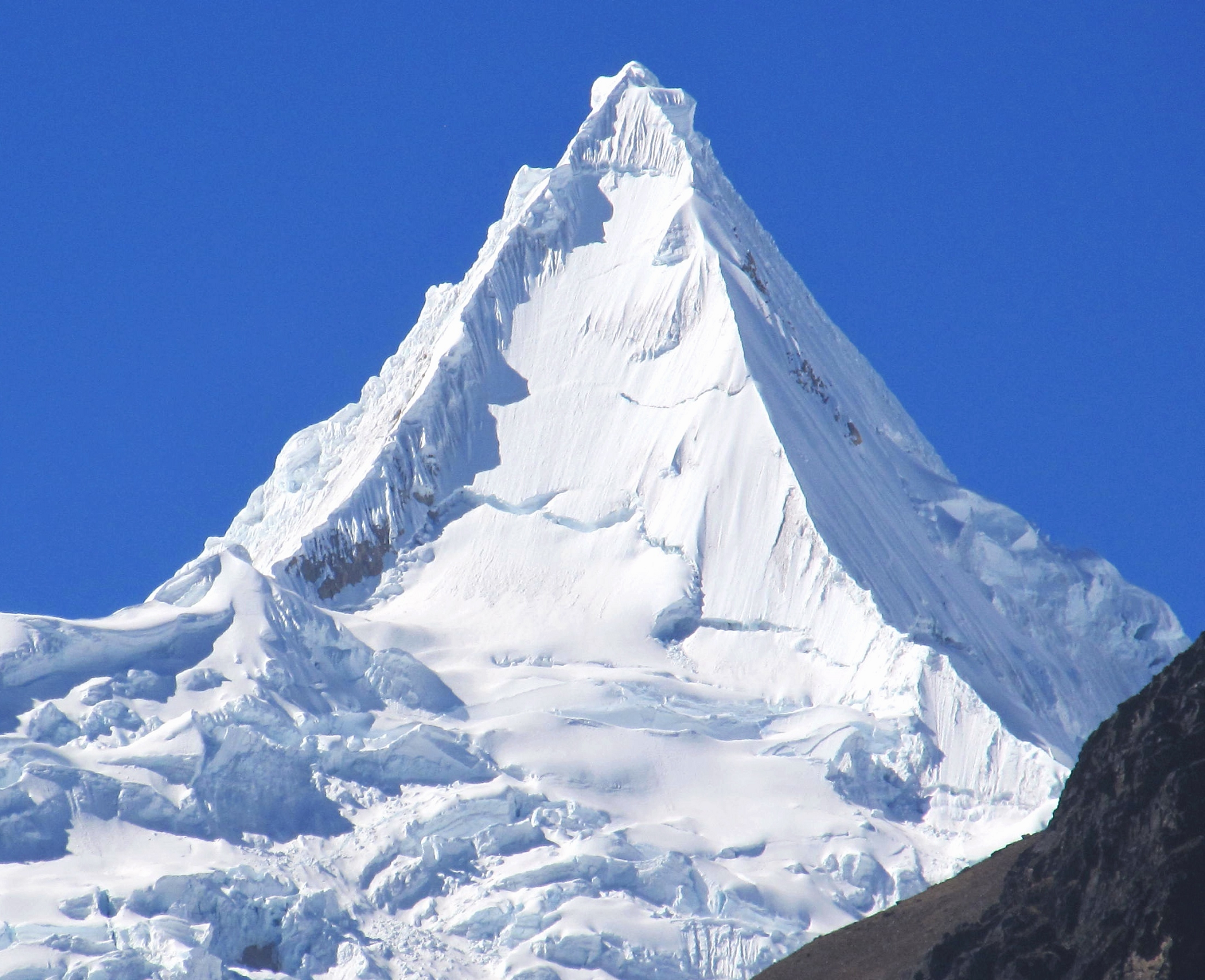 Frank R 1981 (Wikipedia) |
 Alpine Worlds (The Mountain Guides) | 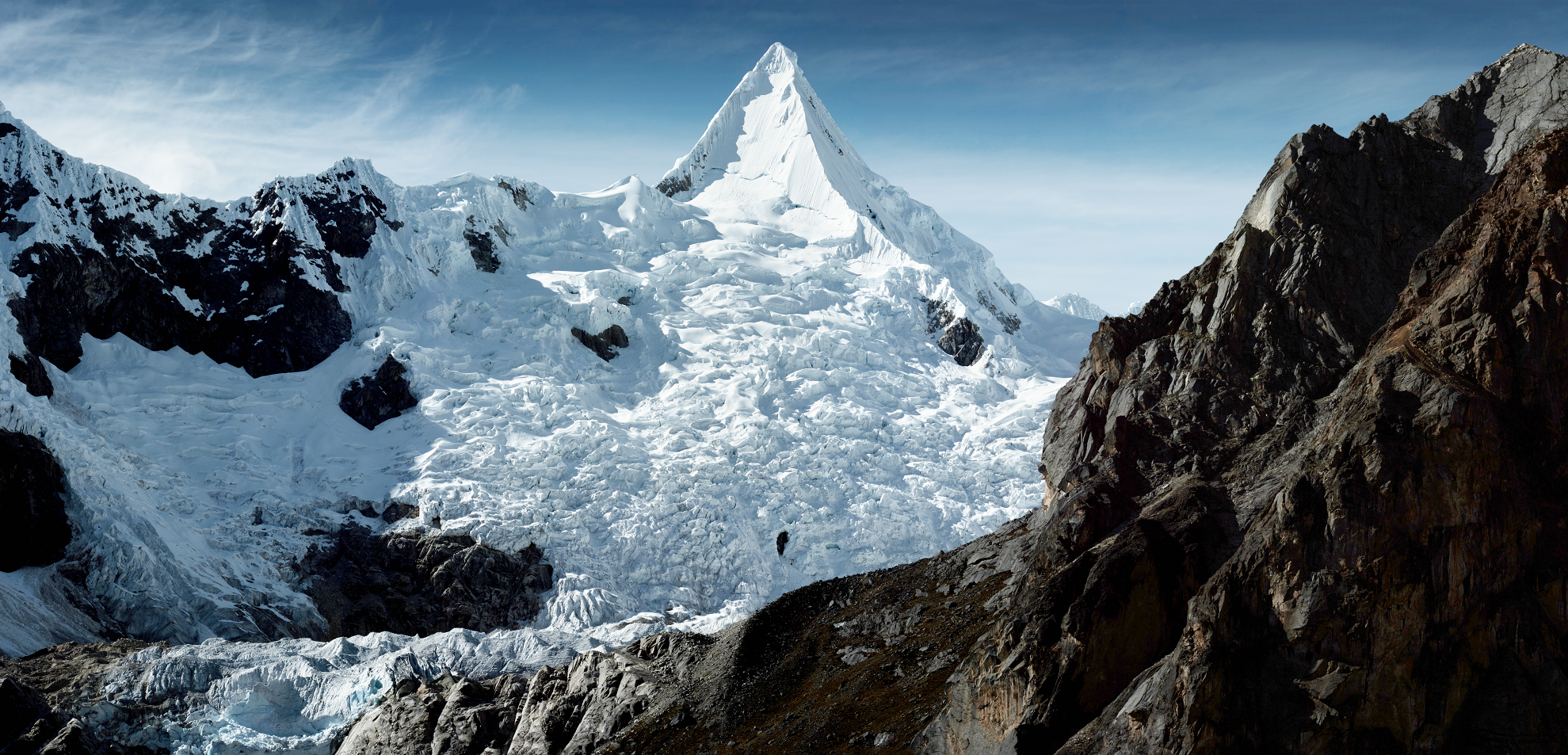 Skouatroulio (iStock) I |
 Vitaliy & Hamik (Summit Post) | 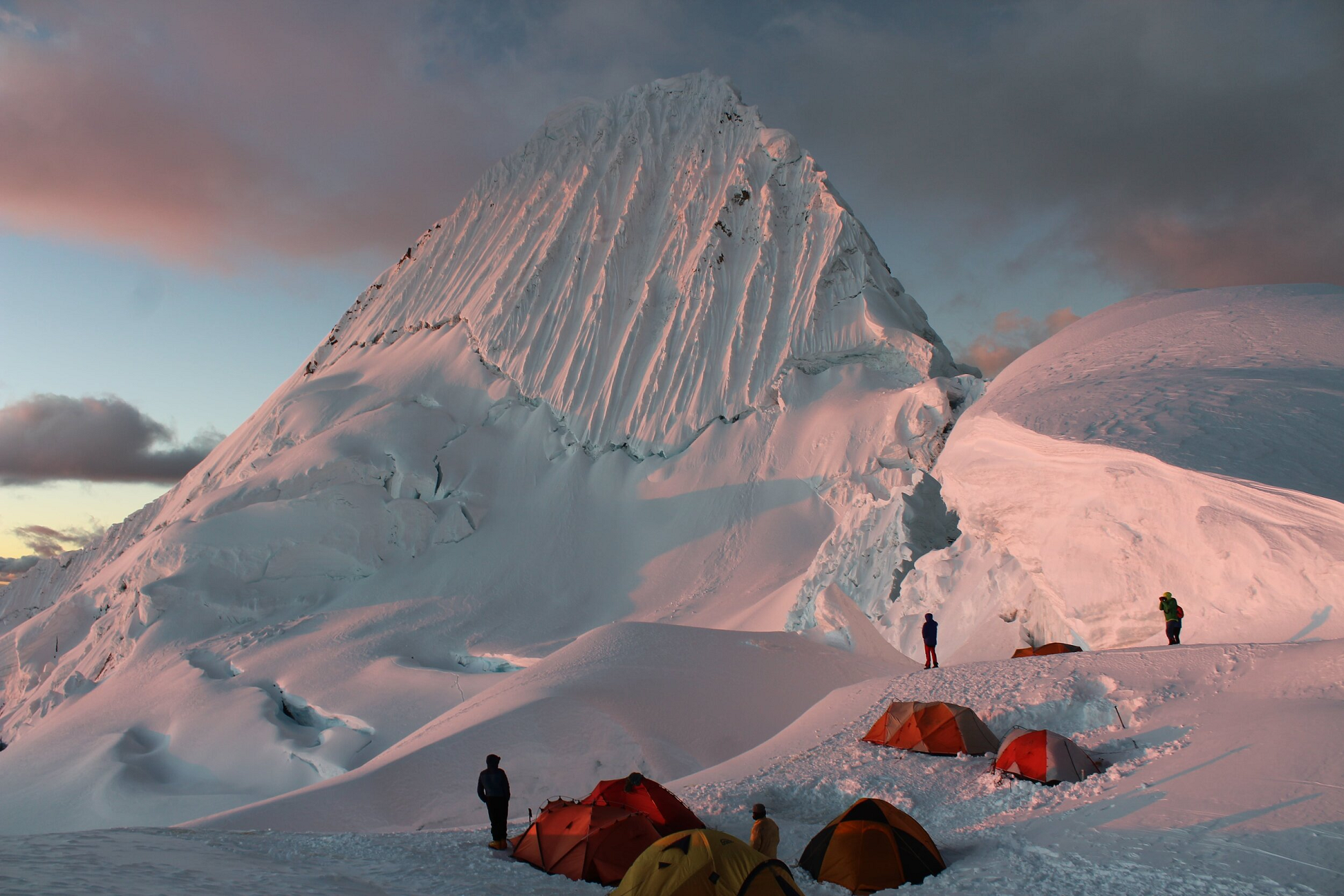 I I |
 Alpine Worlds (The Mountain Guides) | 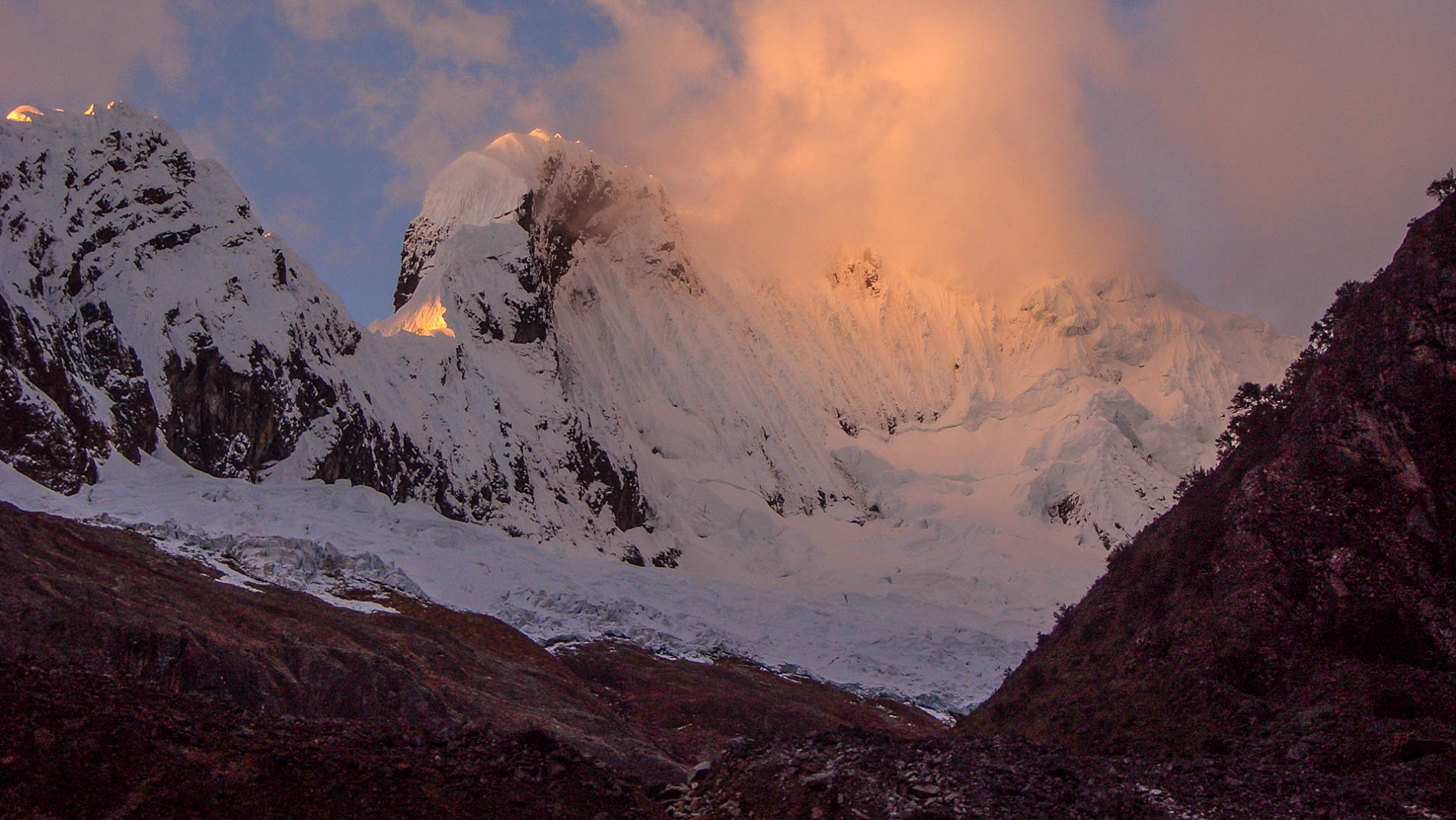 Alpine Worlds (The Mountain Guides) |



Huandoy[2][3][4] (probably from Quechua wantuy, to transfer, to transpose, to carry, to carry a heavy load)[5] or Tullparaju[6] (possibly from Quechua tullpa rustic cooking-fire, stove, rahu snow, ice, mountain with snow)[7][8] is a mountain located inside Huascarán National Park in Ancash, Peru. It is the second-tallest peak of the Cordillera Blanca section of the Andes, after Huascarán. These two peaks are rather nearby, separated only by the Llanganuco glacial valley (which contains the Llanganuco Lakes) at 3,846 m asl.
It is a snow-capped mountain with four peaks arranged in the form of a fireplace, the tallest of which is 6,395 m. The four peaks are each over 6,000 m, and are:[6]
- Huandoy (6,395 m)
- Huandoy-West (6,356 m)
- Huandoy-South (6,160 m)
- Huandoy-East (6,000 m)
It was first climbed in 1932 by a German party.[9]
Myth
Huascarán was a noble man who lived in a certain place in Áncash, while Huandoy was a woman who lived in a small town very close to where this mountain is now. Huascarán was enormously in love with the girl, so they always saw each other secretly. One day Huascarán’s father found out that he was in love with the little woman, so he asked the Sun God for help. Seeing that he could not separate the two lovers, he decided to turn them into mountains, but the divinity decided to bring them together so that despite their being mountains continued with their love.
This article uses material from the Wikipedia article Huandoy, which is released under the Creative Commons Attribution-Share-Alike 4.0 International License (view authors).
 Christian Vinces (iStock) | 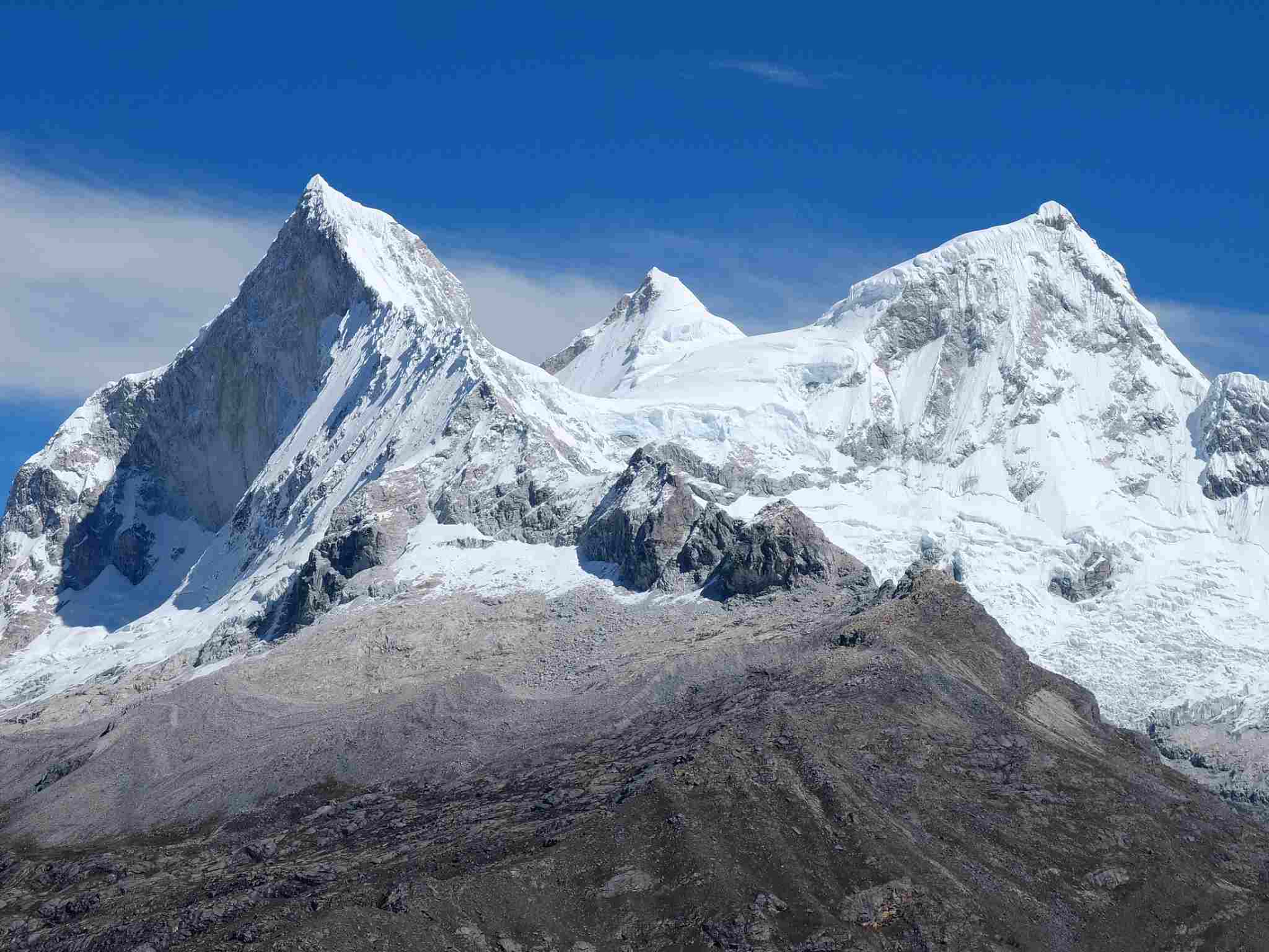 Marguerite (Flickr) |
 Inti Runa Viajero (Wikipedia) | 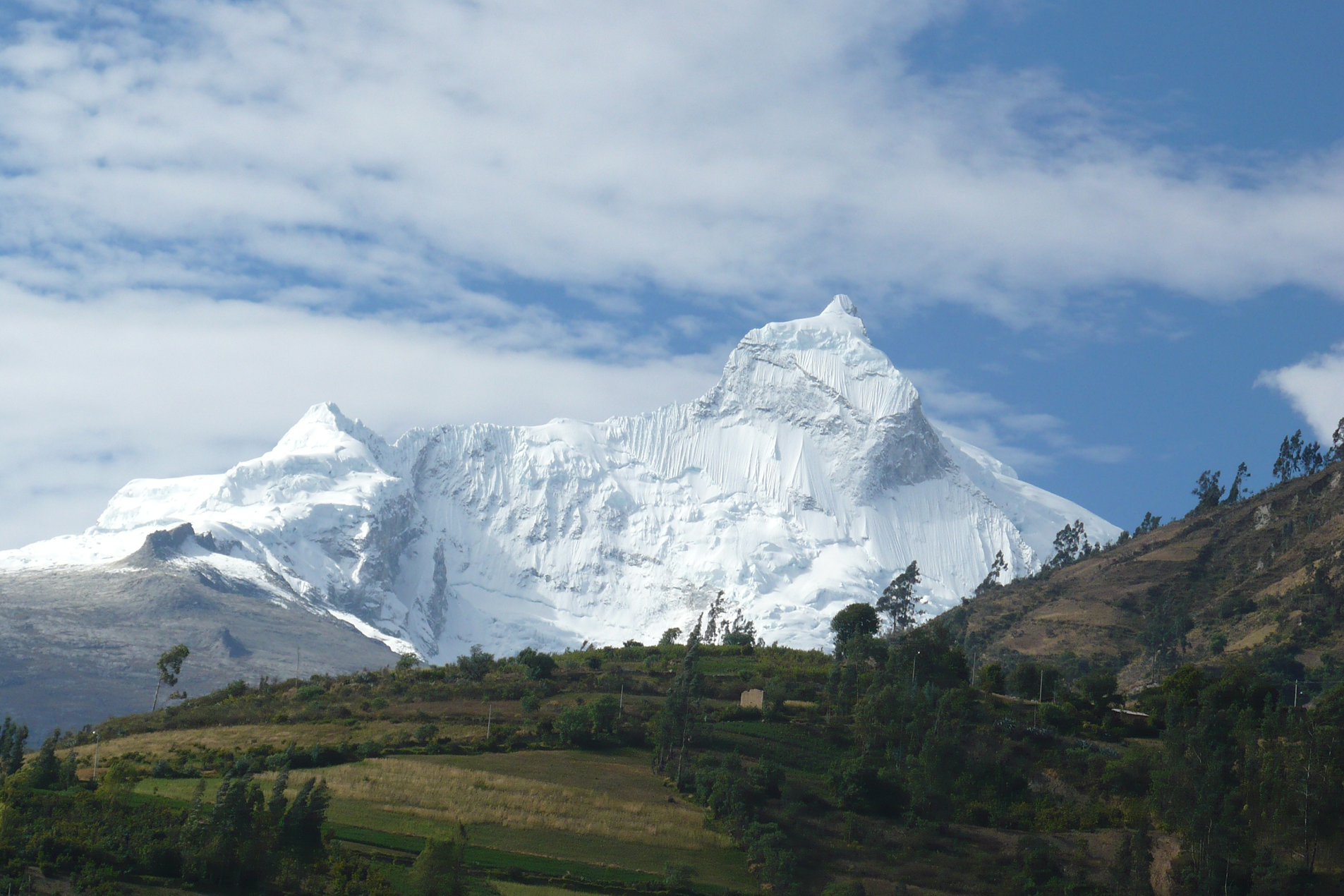 Clarquitecto (Wikipedia) I |


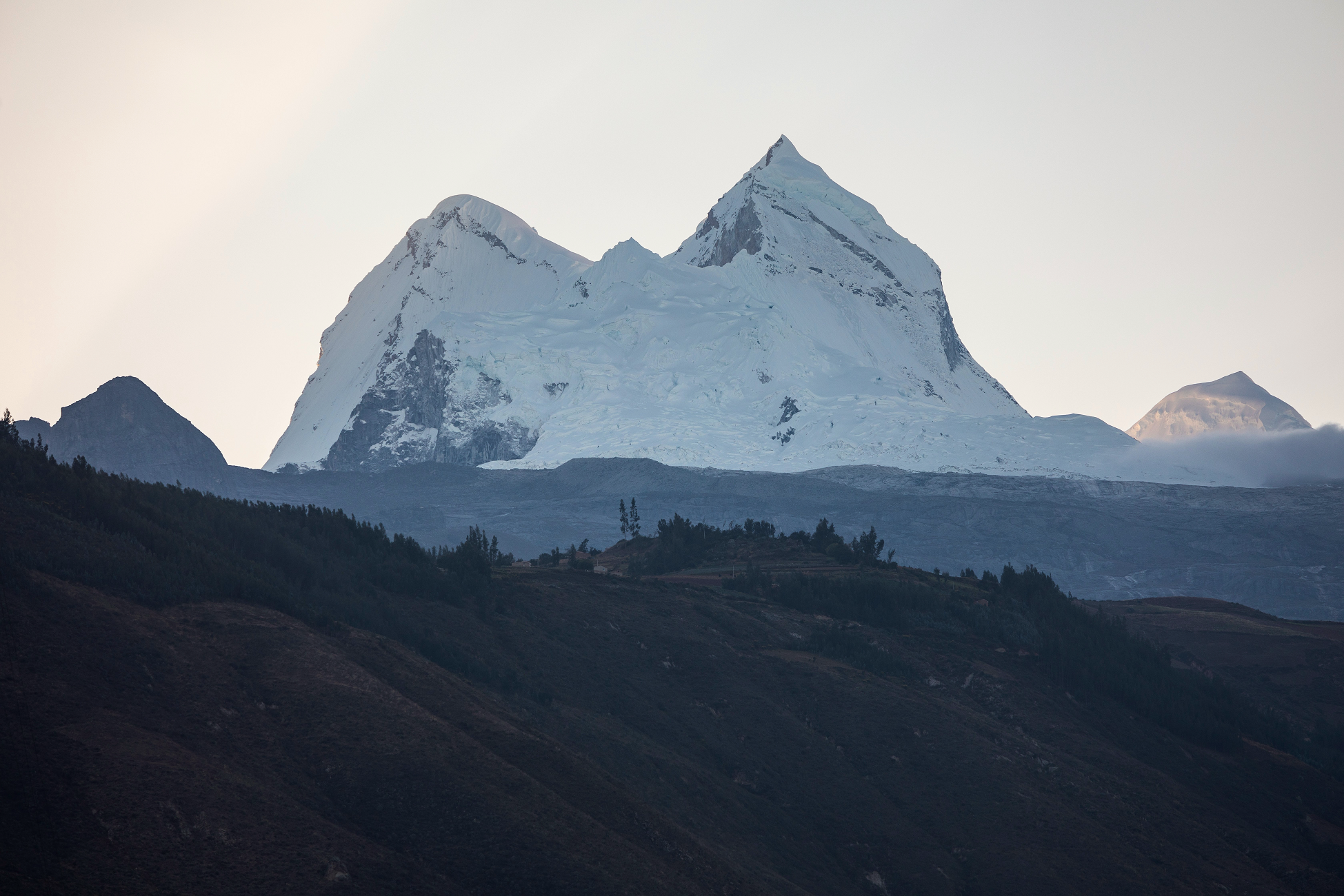
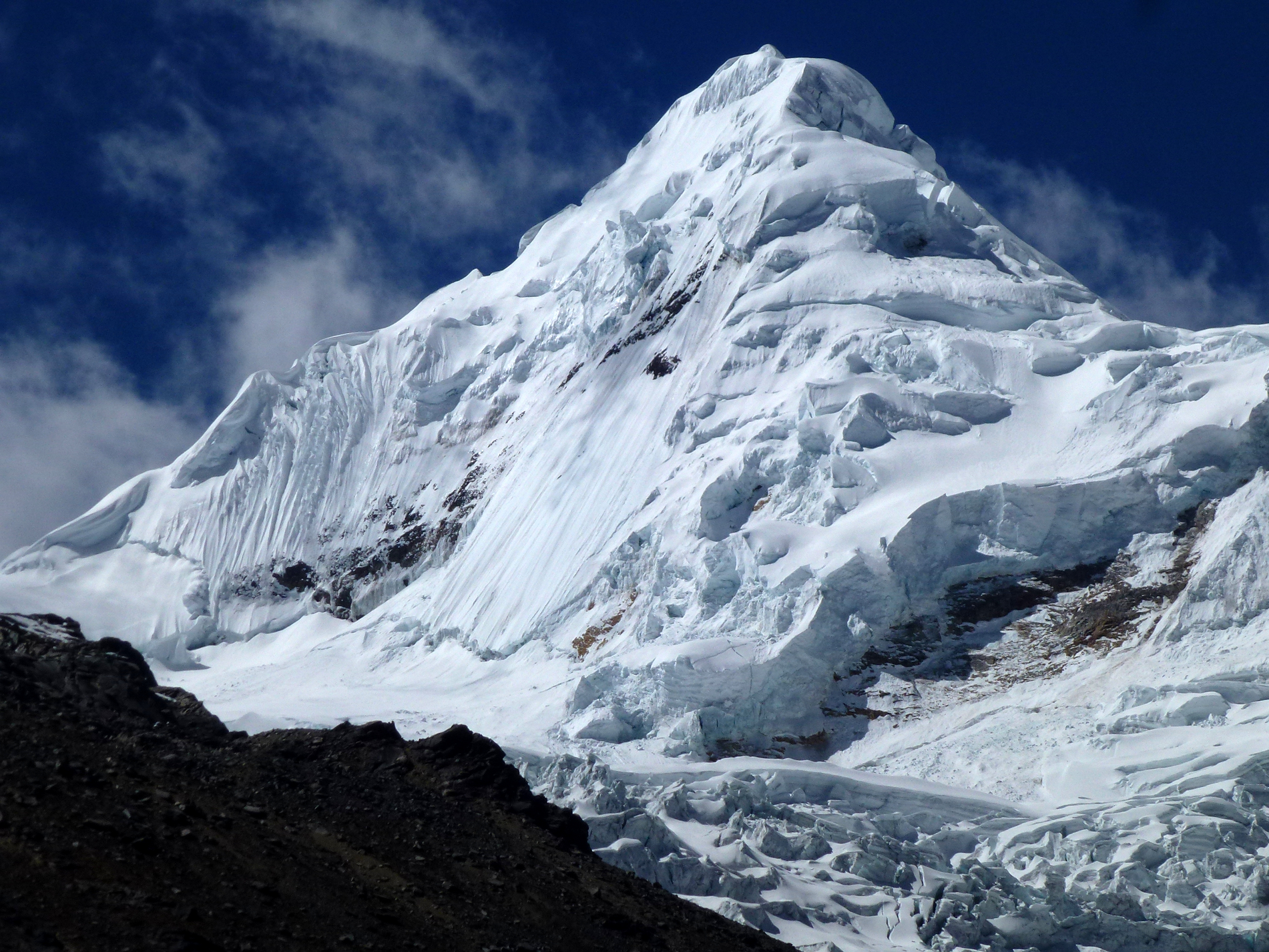
Huascarán (Spanish pronunciation: [waskaˈɾan]), (Quechua: Waskaran), Nevado Huascarán or Mataraju is a mountain located in Yungay Province, Department of Ancash, Peru. It is situated in the Cordillera Blanca range of the western Andes. The southern summit of Huascarán (Huascarán Sur), which reaches 6,768 metres (22,205 ft), is the highest point in Peru, the northern Andes (north of Lake Titicaca), and in all of the earth’s Tropics. Huascarán is the 4th highest mountain in South America after Aconcagua, Ojos del Salado, and Monte Pissis. Huascarán is ranked 25th by topographic isolation.
Name
Until the 20th century, the mountain lacked a single commonly accepted name but it was rather known by different names within the surrounding towns and villages. The first recorded mention of the name Huascaran appeared in 1850 as Huascan,[3] name given by the local people likely because the mountain rises above the village of Huashco, Huashco getting its name from the Quechua word for rope (waska). At the beginning of the 20th century, the name appeared as Huascarán, a form which has not since changed.[4] It seems that the name Huascarán is merely a contraction of Huashco-Urán. When the mountain was mentioned, it was thought of in connection with the village and was called Huashco-Urán or “Beyond and down from the village of Huashco.”[5]
Other names given to the mountain were Matarao and Mataraju, Mataraju being the name by which the local indigenous inhabitants prefer to call the mountain,[6] from Ancash Quechua mata (twin) and rahu (snow peak), meaning ‘twin snow peaks’.
Myth
Huascarán was a noble man who lived in a certain place in Áncash, while Huandoy was a woman who lived in a small town very close to where this mountain is now. Huascarán was enormously in love with the girl, so they always saw each other secretly. One day Huascarán’s father found out that he was in love with the little woman, so he asked the Sun God for help. Seeing that he could not separate the two lovers, he decided to turn them into mountains, but the divinity decided to bring them together so that despite their being mountains they continued with their love.[citation needed]
This article uses material from the Wikipedia article Huascarán, which is released under the Creative Commons Attribution-Share-Alike 4.0 International License (view authors).
 |  |
 Twiga269 EVEREST (Flickr) |  Carlo Brescia (Wikipedia) I |
