
Map of Ellsworth Mountains


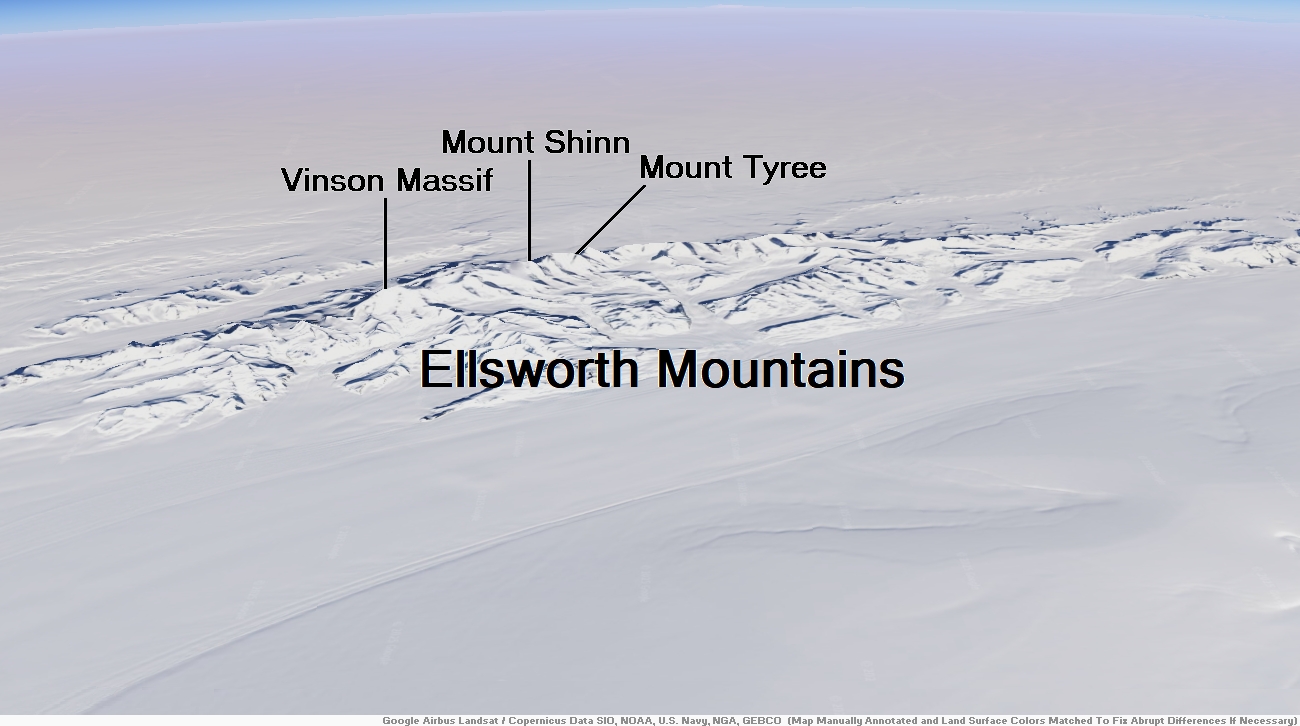


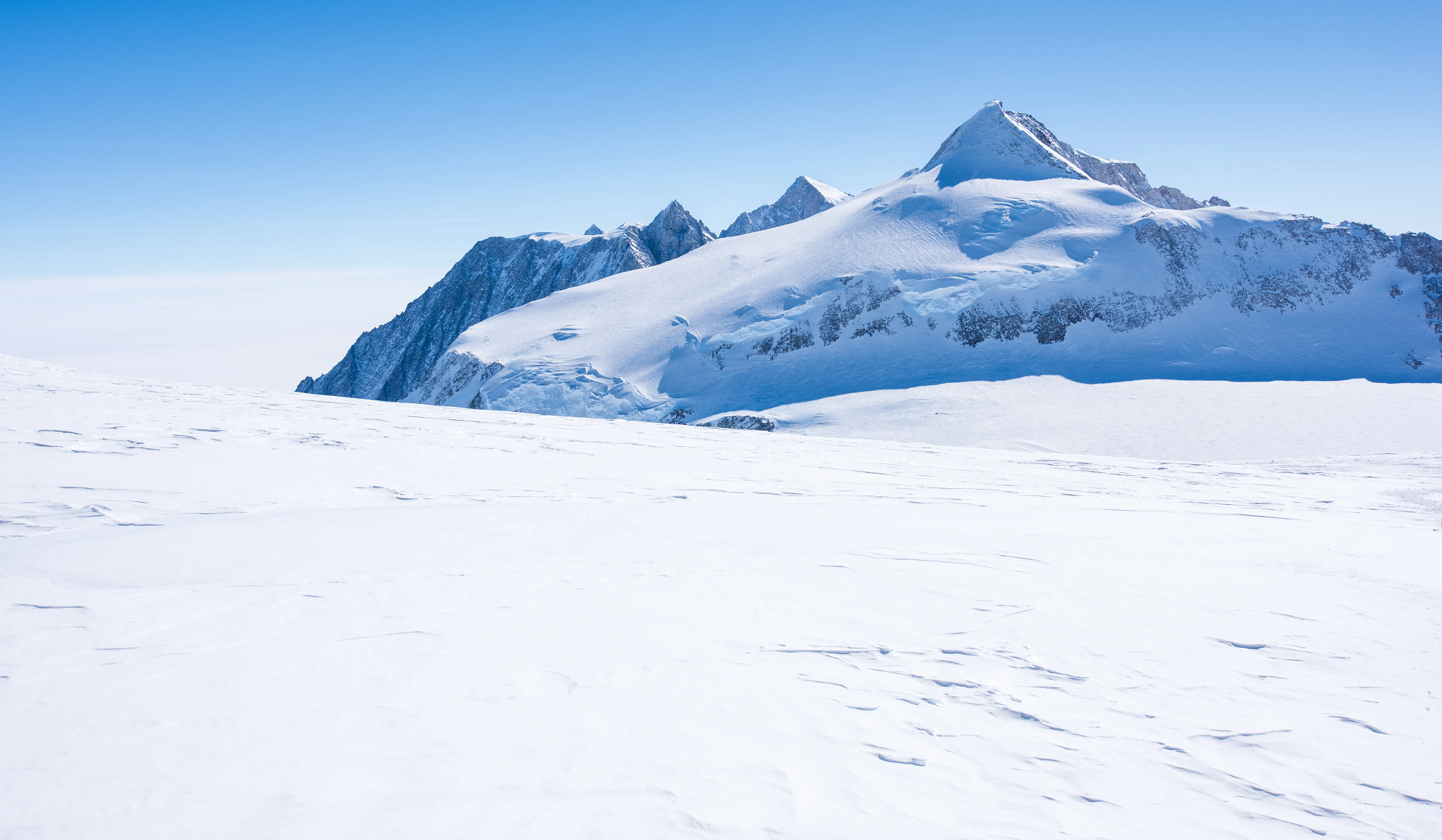
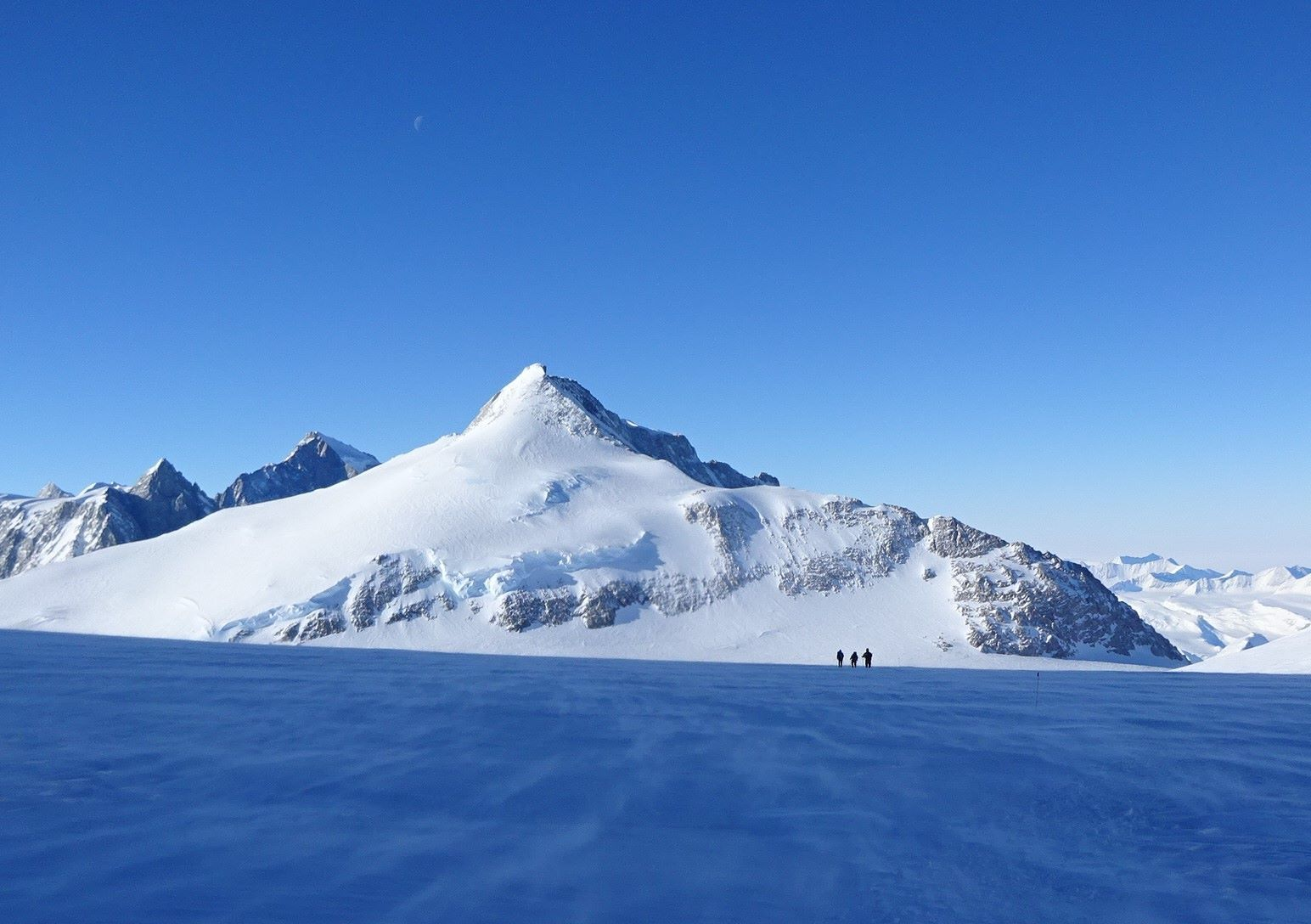
Vinson Massif (/ˈvɪnsən mæˈsiːf/) is a large mountain massif in Antarctica that is 21 km (13 mi) long and 13 km (8 mi) wide and lies within the Sentinel Range of the Ellsworth Mountains. It overlooks the Ronne Ice Shelf near the base of the Antarctic Peninsula. The massif is located about 1,200 kilometers (750 mi) from the South Pole. Vinson Massif was discovered in January 1958 by U.S. Navy aircraft. In 1961, the Vinson Massif was named by the Advisory Committee on Antarctic Names (US-ACAN), after Carl G. Vinson, United States congressman from the state of Georgia, for his support for Antarctic exploration. On 1 November 2006, US-ACAN declared Mount Vinson and Vinson Massif to be separate entities.[4][5] Vinson Massif lies within the unrecognized Chilean claim under the Antarctic Treaty System.
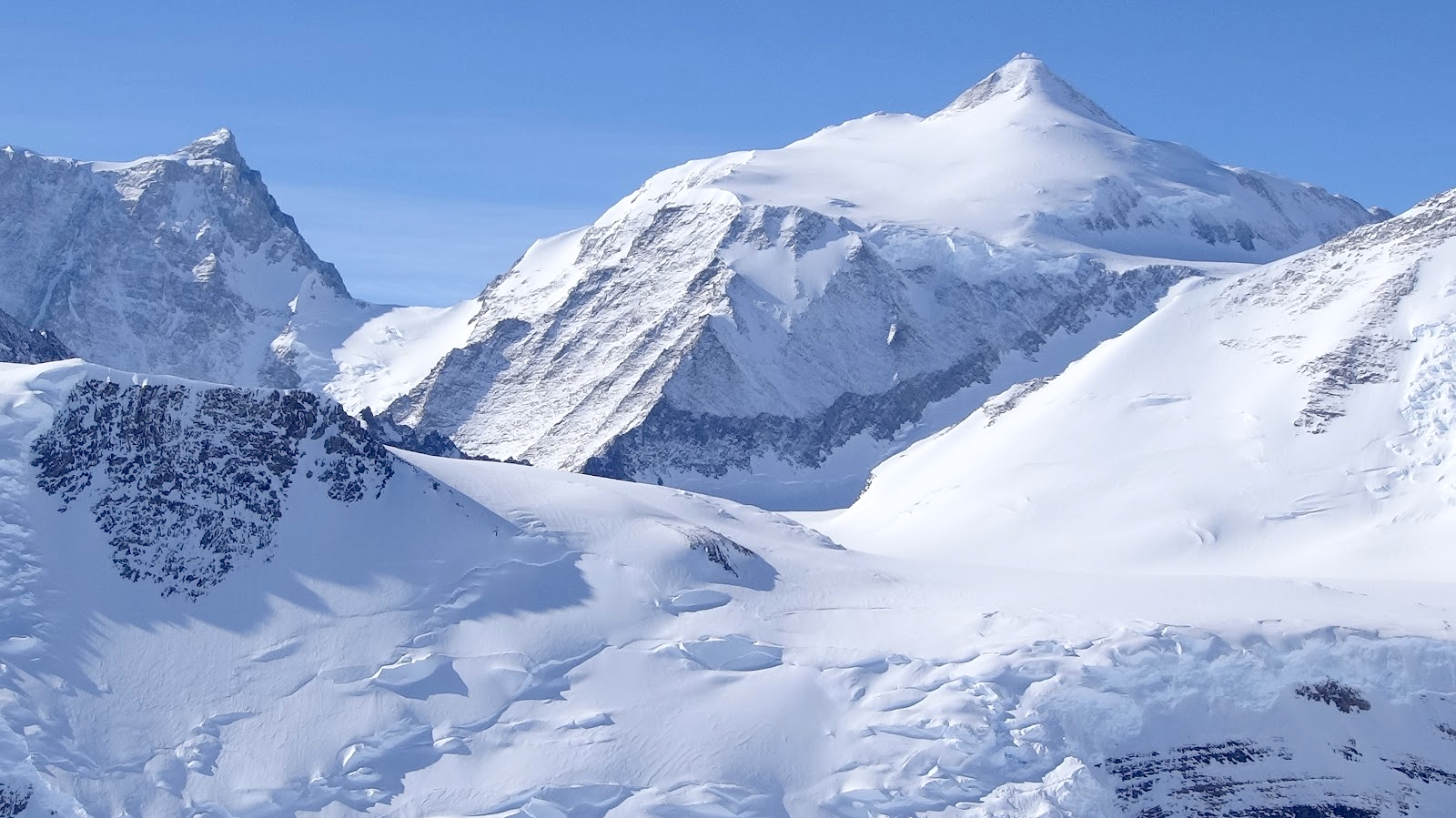
Mount Vinson is the highest peak in Antarctica, at 4,892 meters (16,050 ft).[6] It lies in the north part of Vinson Massif’s summit plateau in the south portion of the main ridge of the Sentinel Range about 2 kilometers (1+1⁄4 mi) north of Hollister Peak.[5] It was first climbed in 1966 by an American team led by Nicholas Clinch. An expedition in 2001 was the first to climb via the Eastern route, and also took GPS measurements of the height of the peak.[7] As of February 2010, 1,400 climbers have attempted to reach the summit of Mount Vinson.[8] Mount Vinson is ranked 6th by topographic isolation.
Geography
The Vinson Massif extends between Goodge Col and Branscomb Glacier to the northwest, Nimitz Glacier and Gildea Glacier to the southwest and south, and Dater Glacier and its tributary Hinkley Glacier to the east. The southeastern part of the massif ends at Hammer Col, which joins it to the Craddock Massif, of which the highest point is Mount Rutford (4,477 meters (14,688 ft)). The massif comprises both the high central Vinson Plateau with its few peaks rising to over 4,700 meters (15,400 ft), and several side ridges mostly trending southwest or northeast from the plateau.
The current height (4,892 metres (16,050 ft)) of Mount Vinson was measured by a GPS survey that was conducted by the 2004 Omega Foundation team comprising Damien Gildea of Australia (leader) and Rodrigo Fica and Camilo Rada of Chile.[9] From 1998 through at least 2007, the Omega Foundation kept a GPS receiver on the summit for a suitable period of time to obtain accurate satellite readings.[9]
Geology
Steeply inclined strata known as the Crashsite Group forms Vinson Massif. It consists of 3,000 meters (9,800 ft) of shallow-water, mostly marine, tan, green, and red quartzose sandstones (quartzites) and argillites. In ascending order, the Crashsite Group is subdivided into the Howard Nunataks Formation (1,630 meters (5,350 ft)), the Mount Liptak Formation (1,070 meters (3,510 ft)), and the Mount Wyatt Earp Formation (300 meters (980 ft)). Erosion-resistant and steeply inclined beds of the Mount Wyatt Earp Formation comprise the crest of the Vinson Massif, including Mount Vinson. The steeply inclined strata of the Crashsite Group are part of the western limb of a major syncline that forms the core of the Sentinel Range within the Ellsworth Mountains. The Mount Wyatt Earp Formation contains Devonian fossils. The transition beds at the base of the Crashsite Group contain Late Cambrian trilobites. The intervening lower parts of the Crashsite Group likely include Ordovician and Silurian strata.[10][11]
This article uses material from the Wikipedia article Vinson Massif, which is released under the Creative Commons Attribution-Share-Alike 4.0 International License (view authors).
 |  |
 I | 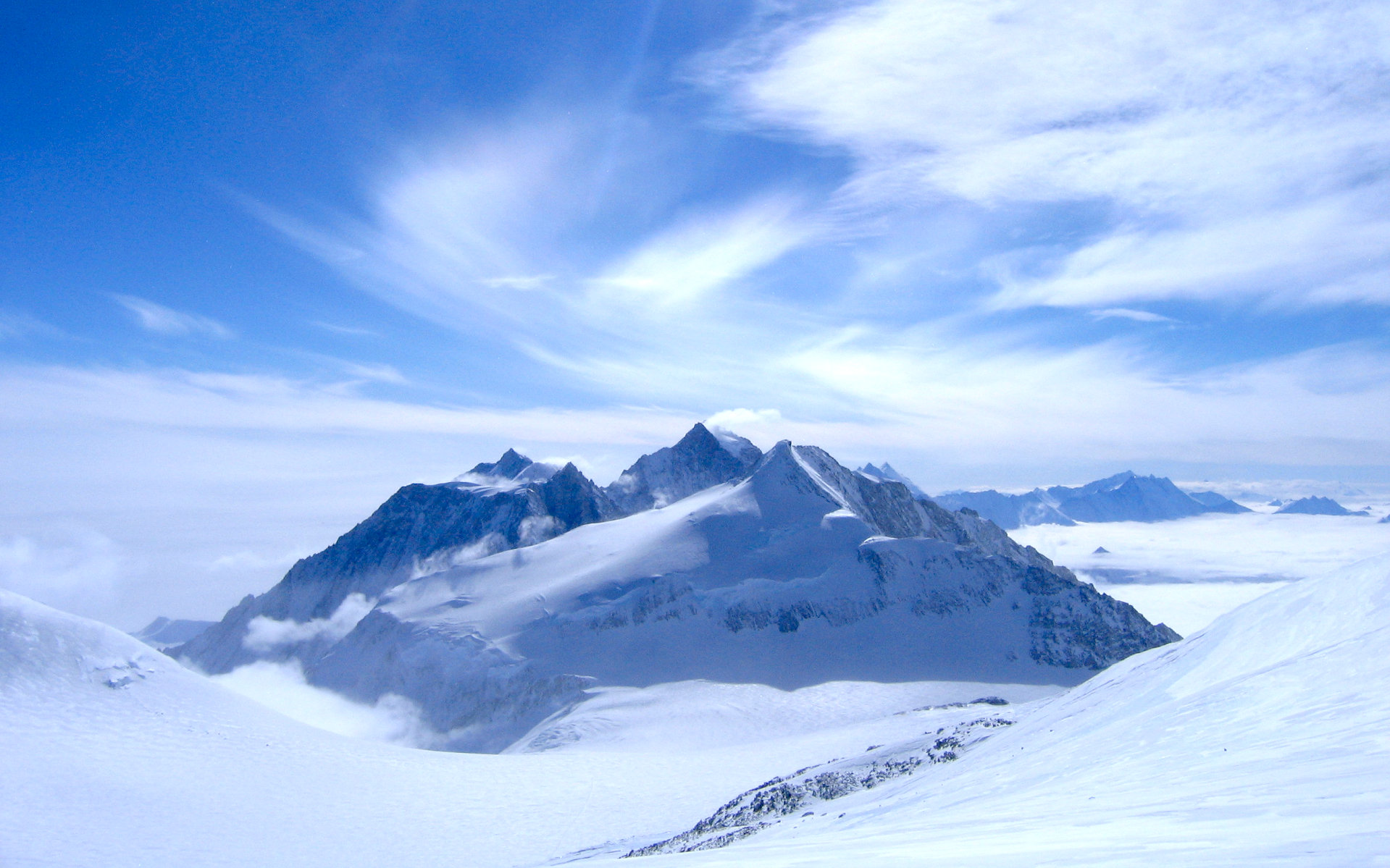 NoahJonKatz (iStock) |



Mount Shinn is a mountain 4,661 meters in elevation, standing 6 km (4 miles) southeast of Mount Tyree in the Sentinel Range, Ellsworth Mountains in Antarctica. It surmounts Ramorino Glacier to the north, upper Crosswell Glacier to the northeast, Goodge Col to the southeast, and Branscomb Glacier to the south-southwest. Mount Shinn is thought to be the third-highest peak in Antarctica.
The peak was discovered on IGY reconnaissance flights in January 1958, and named by the Advisory Committee on Antarctic Names (US-ACAN) for Lieutenant Commander Conrad S. (Gus) Shinn, U.S. Navy, a pilot on some of these flights. Shinn was pilot of the Navy R4D aircraft carrying Admiral Dufek which, on October 31, 1956, made the first plane landing at the geographic South Pole. It had been thought to be over 4800m high, but was re-measured in 2001 by Damien Gildea and Rodrigo Fica of the Omega Foundation, using a Trimble 5700 GPS receiver and the Australian government’s AUSPOS processing system.
Due to its vicinity to the more coveted Mount Vinson, Mt. Shinn has been climbed numerous times as a side trip on a Vinson expedition.
Maps
Vinson Massif. Scale 1:250 000 topographic map. Reston, Virginia: US Geological Survey, 1988.
Antarctic Digital Database (ADD). Scale 1:250000 topographic map of Antarctica. Scientific Committee on Antarctic Research (SCAR), 1993–2016.
This article uses material from the Wikipedia article Mount Shinn, which is released under the Creative Commons Attribution-Share-Alike 4.0 International License (view authors).
 Christian Stangl (Wikipedia) |


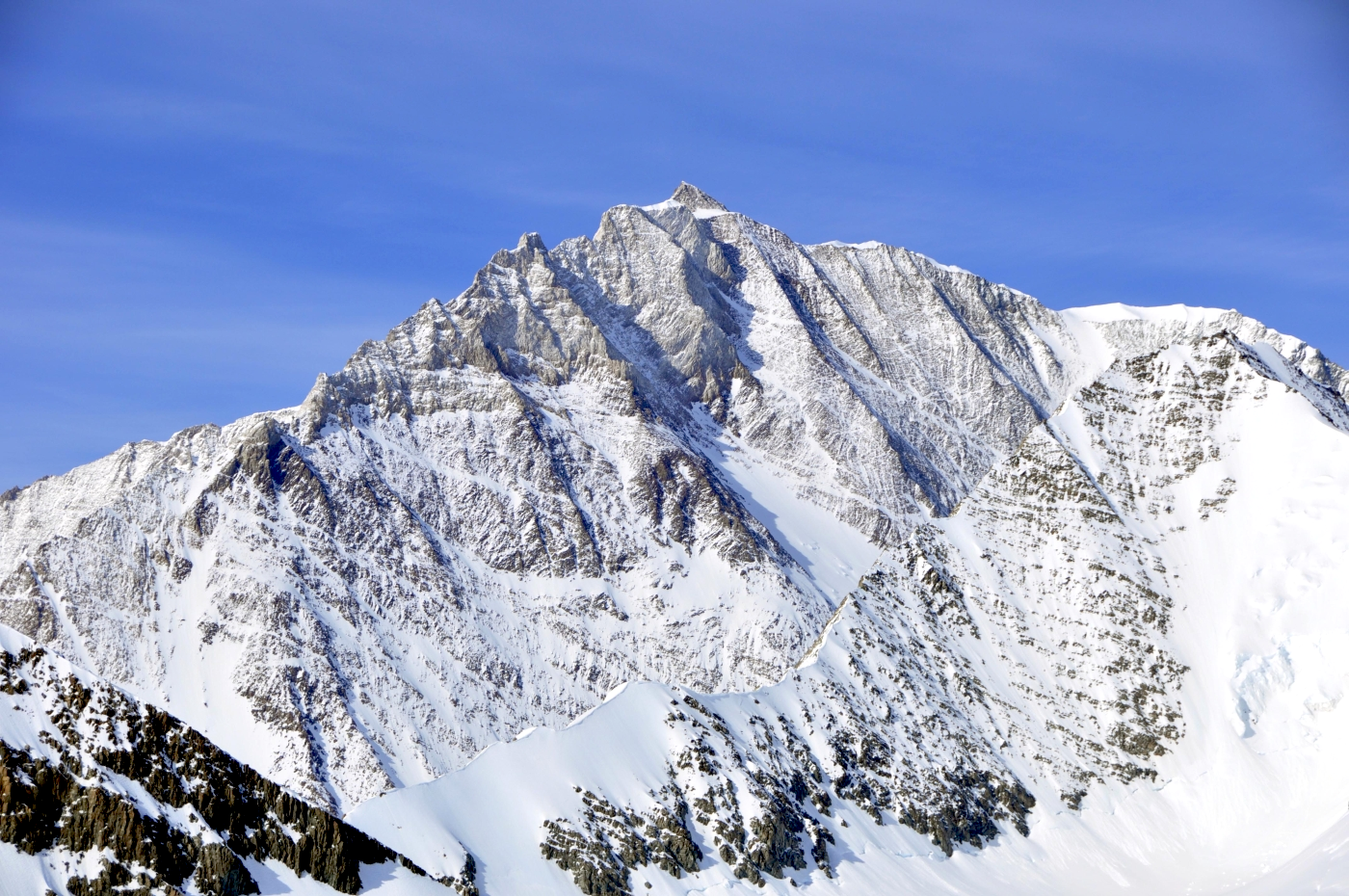
Mount Tyree (4852m) is the second highest mountain of Antarctica located 13 kilometres northwest of Mount Vinson (4,892 m), the highest peak on the continent. It surmounts Patton Glacier to the north and Cervellati Glacier to the southeast.
History
Mt. Tyree was discovered in January 1958 during reconnaissance flights by the United States Navy VX-6 squadron, and mapped later that month by the Marie Byrd Land Traverse Party. The mountain was named for Rear Admiral David M. Tyree, who was commander of the U.S. Naval Support Force in Antarctica, from April 14, 1959 to November 26, 1962.[1]
As of 2017, the summit had only been reached on six occasions, by a total of fifteen people, via three different routes: in January 1967 by John Evans and Barry Corbet (of Corbet’s Couloir); in January 1989 by Terry ‘Mugs’ Stump; in 1997 by French alpinists Antoine de Choudens and Antoine Cayrol; and later in 1997 by Conrad Anker and Alex Lowe. On January 3, 2012 Hans Kammerlander, Robert Miller and Christian Stangl repeated the French route to make the fifth ascent. Out of fifteen mountaineers who successfully climbed Mt Tyree, three died in unrelated mountaineering accidents within four years of their respective ascents.[3] The still-unclimbed south face is 2,000 metres (6,600 ft) high and one of the largest walls in Antarctica.
On January 16, 2017, five climbers made the sixth ascent of Mt. Tyree by the Grand Couloir (French route). The Tyree 50/50 expedition included Richard Thurmer, Jr, Victor Saunders, Maria “Pachi” Paz Ibarra, Seth Timpano and Todd Tumolo. Richard Thurmer is the first amateur climber and second oldest man (age 61) to make the summit. Victor Saunders is the oldest man to summit Mt. Tyree (age 66). Maria “Pachi” Paz Ibarra is the first woman to reach the summit. The Tyree 50/50 expedition of January 2017 was the 50th anniversary of the first summit in January 1967 and the team increased the number of climbers on the summit by 50%.[4]
On January 1, 2022, Jenn Drummond became the first American woman and only the second woman to summit the mountain.[5] Jenn’s team members were Sebastian Grau-Kunhardt, Todd Passey, Sam Hennessey and Rob Smith.
The climbing season is November to January, when the sun is above the horizon 24 hours a day and the air is warmest—up to −30 °C (−20 °F) near the summit. [citation needed] Like the nearby Mount Vinson, the mountain may be accessed by means of a 6-hour flight from Punta Arenas, Chile, to Union Glacier Camp followed by a 200 km flight on a ski plane to the base of the mountain.
This article uses material from the Wikipedia article Mount Tyree, which is released under the Creative Commons Attribution-Share-Alike 4.0 International License (view authors).
 Christian Stangl (Wikipedia) |
